
New Lab Opening
“I took a course on satellite remote sensing my last year there and absolutely fell in love with the course and its applications and just realized how little had been done in archeology so I went to Cambridge to do my PhD and decided to focus on developing a methodogly to locate sites in Egypt using this kind of technology.”
That Parcak became entranced by satellite imagery comes as no surprise, really. Her grandfather pioneered the use of aerial photography in forestry.
It really, I think, is something that’s in my genes.”
What is a bit of a surprise, though, is that she’s now partnering with UAB’s School of Public Health to open a satellite imaging lab on campus. Parcak will help public health researchers pinpoint disease outbreaks before they happen. They’ll use images created in the lab to try to sift out what environmental factors play into an epidemic. Take for example malaria. Scientist know the mosquitoes that spread the disease like to breed near warm water. Researchers at UAB will study infrared images of a particular region, say Zambia, looking for areas where water is red or orange or yellow — which means it’s hot or getting there. The idea is if they can find where the mosquitoes breed they can stop the spread of malaria.
Greg Glass at the Johns Hopkins Bloomberg School of Public Health has done similar research with the hantavirus, a possibly lethal bug spread by mice.
“We’ve been involved with a project that’s been funded by the National Institutes of Health to look at not just the hantavirus in the U.S. Southwest, but also throughout the Americas and Panama down into Chile and so we’ve actually been able to build an entire system for the country of Chile that can be used, actually, as an early warning system of disease outbreaks.”
All by using satellite imaging to better understand the kind of environment the mice that spread the virus thrive in. Glass had had success with other illnesses, like Lyme Disease, but says it’s taking awhile to catch on.
“Part of that, I think, is the trans-disciplinary nature of the field. You’re pulling in rocket science all the way down to public health and microbiology and it’s hard to bridge all those disciplines and get people to see how it all is supposed to work.”
“I would like to think it has the potential of revolutionizing the way that we think about public health and addressing public health issues. It’s just terribly exciting.”
Max Michael is the Dean of UAB’s School of Public Health. He likes to compare all this to the cholera outbreak in 1850’s London. At the time doctors thought the illness was brought on by a miasma … a poisonous mist. But one doctor, John Snow, was convinced the illness was spread by contaminated water. It took him awhile, but he eventually convinced officials to take the handle off a water pump handle in one hard hit area and guess what? The cases of cholera went down. Michael says what Snow did was just as revolutionary then as using satellite imaging is now.
“He really changed the way we think about problems. To some extent we still live in that paradigm, which is a great paradigm, but it’s a hundred and fifty years later. I try to have fun and argue or challenge the students that somebody’s gotta find the 21st Century pump and take the handle off. This may be it. This may be that kind of next paradigm in the way we think about health and illness.”
While she might find literal water pump handles in her archeological work, lab director Sarah Parcak will be going through a paradigm shift all her own…
“I never thought this would happen. But I think it’s a reminder to me that the kind of work that I’m doing, even though in archeology you’re dealing with people who are deceased, they were living. They had these problems, too. I think it focuses me more on the here and now which one always needs when one is digging in the dirt.”
Students and researchers at UAB will begin focusing on the here and now when the Laboratory for Remote Sensing and Health opens in September.

For U.S. pairs skater Danny O’Shea, these Olympics are 30 years in the making
Danny O'Shea turned 35 at his first Olympics, after three decades of skating and two reversed retirements.
Want a mortgage for under 3% in 2026? Meet the ‘assumable mortgage’
Low mortgage rates from the COVID era might still be attainable for homebuyers, if they find the right house and have the cash.
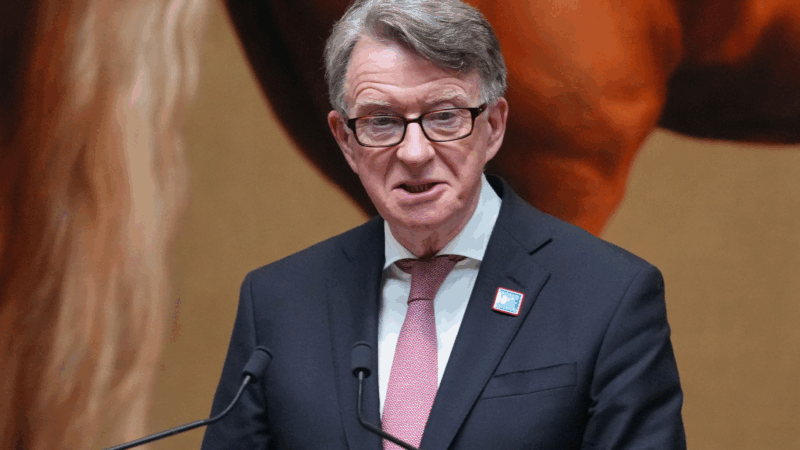
Epstein files fallout takes down elite figures in Europe, while U.S. reckoning is muted
Unlike in Europe, officials in the U.S. with ties to Epstein have largely held their positions of power.
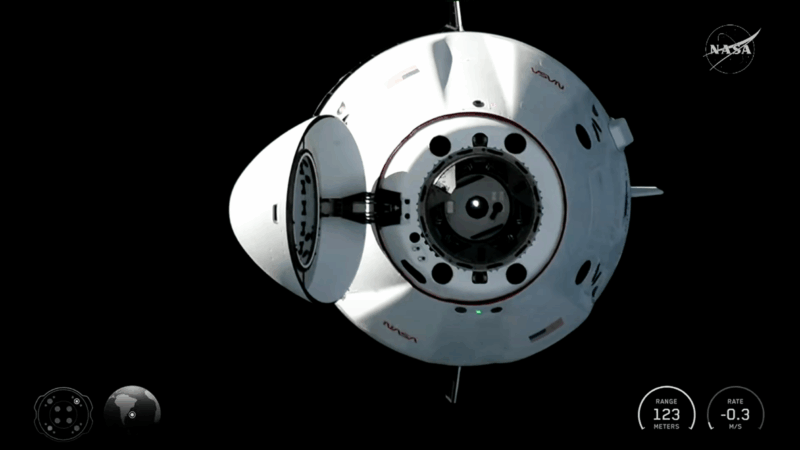
Four people on NASA’S Crew-12 arrive at the International Space Station
The crew will spend the next eight months conducting experiments to prepare for human exploration beyond Earth's orbit.

American speedskater Jordan Stolz wins second Olympic gold with 500-meter race victory
With the win, Stolz joins Eric Heiden as the only skaters to take gold in both the 500 and 1,000 at the same Olympics.
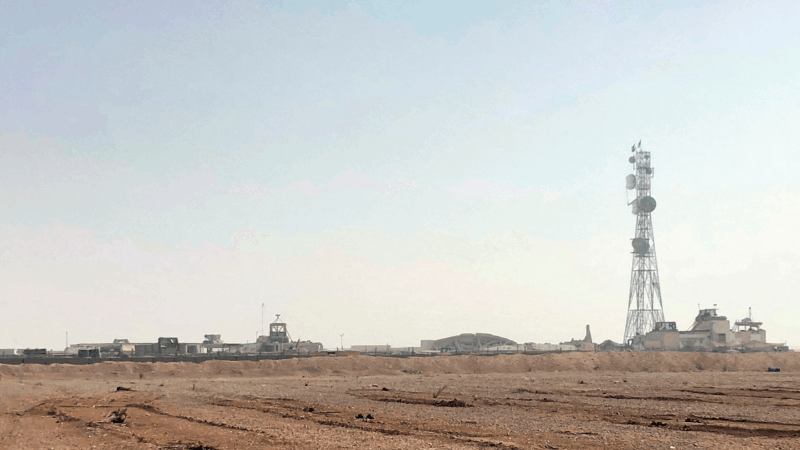
US military reports a series of airstrikes against Islamic State targets in Syria
The U.S. military says the strikes were carried out in retaliation of the December ambush that killed two U.S. soldiers and one American civilian interpreter.
