

Warner Bros. Discovery’s blockbuster announcement Thursday that it would accept Paramount Skydance’s takeover bid shouldn’t be thought of simply as seeking to unify two major Hollywood players, two big streaming platforms and two leading TV news divisions under one roof.
It is certainly that. The nearly $111 billion Paramount-Warner marriage would unite their studios — and their back catalogue of shows and movies. It would add such franchises as D.C. Comics, Harry Potter and Game of Thrones to Paramount’s Top Gun, Mission Impossible and Star Trek powerhouse. Paramount+ and HBO Max. CBS and CNN.
But there’s more to it.
Paramount Skydance Chairman and CEO David Ellison is relying largely on the financial backing of his father, Larry Ellison — the co-founder of software giant Oracle, the lead investor in TikTok US, and one of the richest people on the planet.
The Ellisons have staged what appears to be a lightning-swift ascent through social and legacy media relying heavily on their connection to the Oval Office.
Should the Ellisons receive a green light from regulators to proceed with the deal, the minnow will have swallowed the whale. Warner currently has more than five times the market value of Paramount.
That’s on top of acquiring Paramount itself and a major stake in TikTok US — all in less than a year. And that’s in addition to Oracle, which runs much of the digital backbone of the nation’s commerce and government.

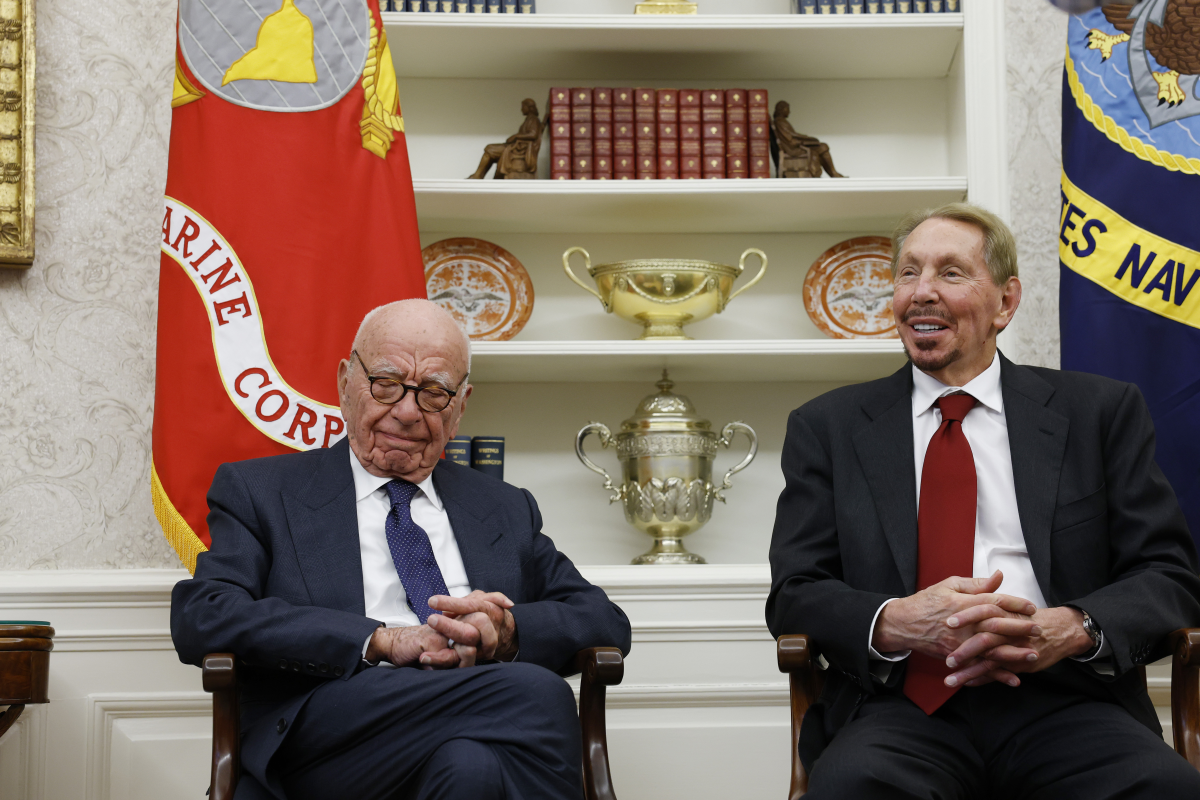
“It’s tech giants becoming media giants,” argues Jon Klein, a former top executive at CNN and CBS News.
But history shows such mega-mergers often end in tears. The movie business is expensive. Cable television is highly profitable but in steep decline as viewers cut the cord. The combined company will be saddled with debt. So why would the Ellisons spend their billions this way?
David Ellison has sought to be a force in Hollywood for years. He helped to produce movies with Tom Cruise at his family’s company Skydance Media. But for his father, Larry Ellison, it’s about more than just making his son’s very expensive dreams come true.
“Beyond any dollars that they can derive — it’s the data about consumer habits, down to the specific identity,” Klein says.
He says the push into artificial intelligence by Oracle creates a thirst for more insight into how people view news and entertainment and what products they buy online. The streaming channels and social media giant both offer greater and more granular information.
“That’s the prism that you’ve got to look at this Paramount/WBD deal through,” says Klein, co-founder of HANG Media, a Gen Z social video engagement platform. “Oracle… wants to be one of the major players in AI. That’s what Oracle wants to get out of media.”
The deal still hinges on acceptance from antitrust regulators in Washington and Europe, who can seek to block the transaction. California’s attorney general made clear Thursday night he would also give the acquisition tough scrutiny.
“If a merger substantially reduces competition in any market, it’s illegal. Courts sort of take that literally,” says University of Chicago law professor Eric Posner, who held a senior antitrust position in the U.S. Justice Department under former President Joe Biden.
“But in practice, the Justice Department has discretion on whether to challenge these mergers,” Posner tells NPR. “And the courts have discretion on whether to block them.”
Friendly ties to Trump
President Trump’s Justice Department is a wild card. Last year, the department’s then antitrust chief, Gail Slater, took an aggressive stance against Google in court. Last month, the Justice Department sued to block Hewlett Packard Enterprise’s $14 billion acquisition of a wireless tech competitor. Slater resigned under duress this month, however.
The Federal Communications Commission is unlikely to intervene, as no broadcast licenses would change hands in the Paramount takeover of Warner. But its chair, Brendan Carr, may well advise the Justice Department and he has lauded David Ellison’s moves at CBS.
Even before sweetening its offer this week, Paramount proclaimed its “confidence in the speed and certainty of regulatory approval for its transaction.”
Publicly, it argues that such consolidation is needed to take on streaming giants, very much including Netflix but also Amazon Prime, Apple, Disney and YouTube.
Behind the scenes — and sometimes in not-so-hidden ways — the Ellisons have become cozy with President Trump. Larry Ellison is a backer and adviser.
On Tuesday night, David Ellison attended Trump’s State of the Union address as a guest of the president’s ally, Senator Lindsey Graham, a South Carolina Republican. Graham tweeted out a photo of the two men making Trump’s signature “thumbs-up” gesture ahead of the speech.
The president cares deeply about TV news. He has publicly said he wants new owners for CNN — which he has blasted repeatedly as “fake news” — and has proven willing to interfere in corporate matters in his return to the White House.

Netflix chief Ted Sarandos met Thursday with administration officials at the White House — though notably not with Trump, according to an aide — in a last-gasp effort to salvage his company’s competing bid. By the end of the night, Netflix had given up the fight.
The shadow cast over the process by the president has inspired sharp criticism of the path that Paramount and the Ellisons took to land the Warner deal.
“A handful of Trump-aligned billionaires are trying to seize control of what you watch and charge you whatever price they want,” Democratic Sen. Elizabeth Warren of Massachusetts said in a statement. “With the cloud of corruption looming over Trump’s Department of Justice, it’ll be up to the American people to speak up and state attorneys general to enforce the law.”
“It is not just the seemingly open corruption of this entire process that leaves me shaken,” writes Jeffrey Blehar in the conservative National Review. “I am shaken by how little people will care.”
Said Seth Stern, head of the Freedom of the Press Foundation, “Ellison will readily throw the First Amendment, CNN’s reporters and HBO’s filmmakers under the bus if they stand in the way of expanding his corporate empire and fattening his pockets.”
CNN’s future hangs in the balance
The Ellisons’ acquisition of Paramount followed a similar path.
Last summer, the previous owners of Paramount announced the end of late night host Stephen Colbert’s CBS show as they sought federal approval to sell the company to David Ellison.
While they cited economics, Colbert’s was the top-rated late night show on network television — and he has been a lacerating satirist of the president. Colbert called the cancellation a “big fat bribe.”
Ellison subsequently made additional pledges to the FCC’s Carr to win support. Among them: he promised the cessation of diversity, equity and inclusion initiatives throughout Paramount and the addition of an ombudsman to field complaints of ideological bias. He named the former head of a conservative think tank to that role.
Carr blessed the sale. He has since praised the shifts made at CBS News.
The question of what happens to CNN hovers prominently over the Warner sale. The network has undergone rounds of cuts under a series of owners seeking to reduce debt; Paramount would be its fourth corporate parent in under a decade.
Other elements are in play as well.
CBS’s new editor in chief is Bari Weiss, founder of the center-right opinion and news site The Free Press. Ellison bought the site and added it to Paramount’s portfolio.

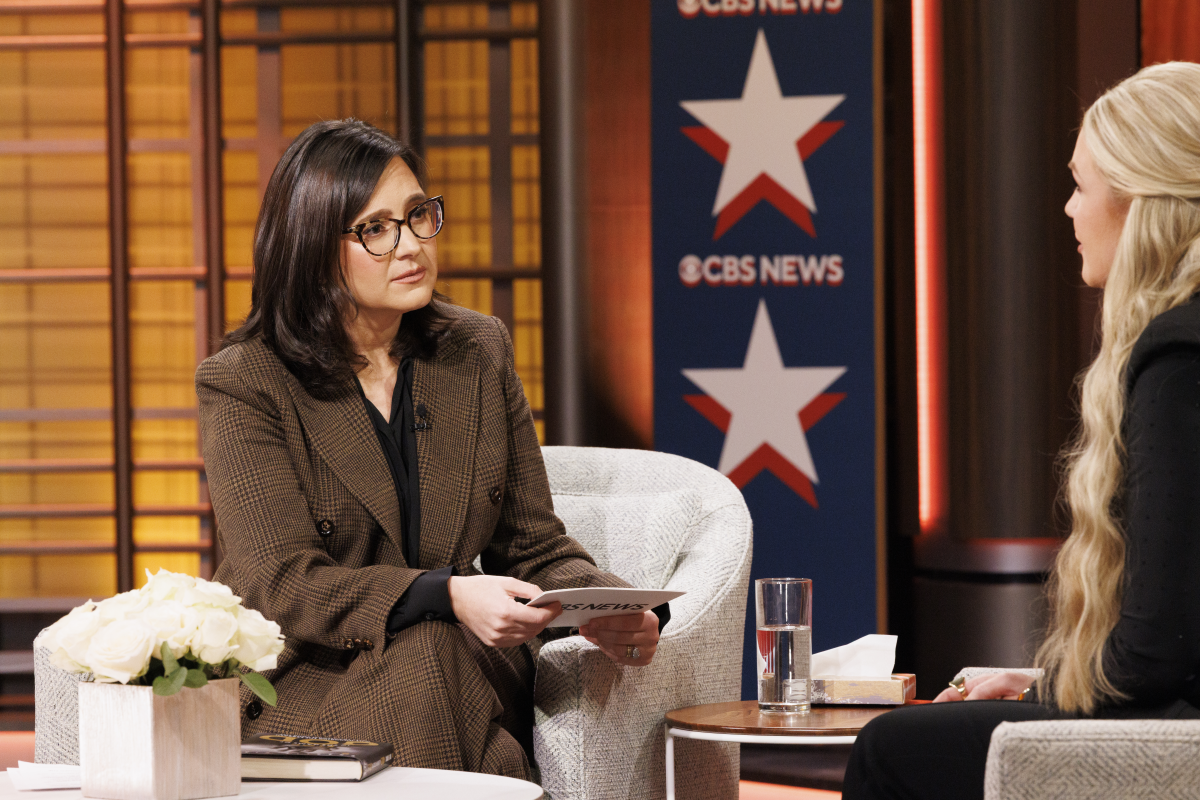
Weiss has contended CBS and much of the rest of the media has been too reflexively hostile to conservatives and the president, and she’s sought to revamp the newsroom.
CNN’s Anderson Cooper, who has also served as a correspondent for CBS’s 60 Minutes for two decades, recently announced that he would leave the show, citing the desire to spend time with his small children. Associates, speaking on condition of anonymity because they were not authorized to disclose internal network matters, say he was concerned about the approach that Weiss has taken at CBS.
She is considered likely to have a role over CNN as well, should the deal go through.
CNN CEO Mark Thompson urged colleagues to focus on their news coverage. “Despite all the speculation you’ve read during this process, I’d suggest that you don’t jump to conclusions about the future until we know more,” he wrote in a memo Thursday.
Perceived value beyond the bottom line
The deal David Ellison struck for Warner is valued at nearly $111 billion. The new company would carry substantial debts and have Saudi and Emirate backing. The profits are currently relatively modest.
Yet Klein contends larger motives are in play. Just look at Google, he says, which owns what many consider the dominant media company, YouTube.
“They want to know what you watch, and where you come from, and what you buy when you watch, and where you go after you buy, and what you post in the comments and what you like and love and all that,” Klein says.
“And if you can combine that with your streaming content and your studio decisions and your marketing for all the content product you’re creating,” he adds, “you’re in a very very powerful position.”
Transcript:
A MARTÍNEZ, HOST:
There is a winner in the epic Hollywood bidding war for Warner Bros. Discovery, and that winner is David Ellison, the CEO of Paramount.
MICHEL MARTIN, HOST:
In a stunning turnaround, Warner Bros. Discovery dropped a deal it had already struck with the streaming giant Netflix for an improved offer from Paramount, and Netflix walked away.
MARTÍNEZ: NPR media correspondent David Folkenflik is reporting on this. David, Warner Bros. rejected a lot of offers for Paramount. What happened?
DAVID FOLKENFLIK, BYLINE: Well, Warner Bros. originally didn’t want Paramount to be bid at all. Paramount triggered all of this by saying, we want to take you guys over. And that opened this up. And it struck a deal with Netflix, which the Warner Bros. board and the Warner Bros. leadership vastly preferred, at least initially. Netflix had said, we’ll give you a deal valued at $83 billion and take over your streaming assets, your studios, your intellectual property, like DC Studios, Harry Potter and the like, and we’ll spin off your cable channels. Paramount wanted the whole enchilada, the whole megillah, and ultimately sweetened its deal to a value in excess of about $111 billion. And…
MARTÍNEZ: Wow.
FOLKENFLIK: …Yesterday, Warner Bros. Discovery’s board said, you know what? That’s a better deal. Netflix had four business days to try to top it. Instead, it walked away – it was spooking investors – and said, we don’t really need it that badly. We’re a giant streamer. We’ll do fine.
MARTÍNEZ: A hundred and eleven billion. That is one meaty enchilada. So what would Paramount look like now after swallowing Warner Bros. Discovery?
FOLKENFLIK: Well, think about it. This would be a Hollywood behemoth. You’d have Warner Bros. Studios and Paramount Studios under the same roof. You’d have Paramount+, the streaming property, which is a bit on the smaller side, paired with HBO Max, one of the dominant streamers coming from Hollywood. You’d have CBS and CBS News with CNN and Comedy Central and Discovery and TBS and a bunch of other properties showing a lot of entertainment and sports. This is going to be a major player in Hollywood intended to take on the streamers – not just Netflix, but also Amazon Prime and Apple – to have, you know, a major force to walk into the future of streaming.
MARTÍNEZ: Yeah. Now, this still has to go through review by antitrust regulators. So what happens with that?
FOLKENFLIK: Well, it’s got to go through review from the U.S. Justice Department, given its combination of enormous media and entertainment assets, but it’s also got to go through regulation in Europe. And, you know, those are not the only ones involved. The state attorney general of California said he intends not only to review this, but potentially to sue to block this. And there are other interested parties that could weigh in here. So this is usually a very intense and significant scrutiny going on here. And at the same time, you know, we live in a slightly different age.
MARTÍNEZ: So, David, you mentioned that if this deal closes, Paramount gets to add CNN to what it’s getting. It was pretty wild to watch Jake Tapper break this news Thursday on his show on CNN.
(SOUNDBITE OF TV SHOW, “THE LEAD WITH JAKE TAPPER”)
JAKE TAPPER: So we have some breaking news in our national lead that affects everybody I’m looking at right now in the studio. Moments ago, Netflix said…
MARTÍNEZ: Yeah. So, David, what changes might David Ellison make to CNN?
FOLKENFLIK: Well, look, the Ellisons – David Ellison and his father, Oracle co-founder Larry Ellison – are very close to President Trump. President Trump has made clear he cares very much about what happens to CNN. You’ve seen the owners of the LA Times, The Washington Post and the Ellisons themselves at CBS alter and reconfigure their news properties to placate Trump and his allies in the current moment. And Trump has shown he’s willing to interfere with corporate maneuvering, like the one we’re seeing play out right now.
MARTÍNEZ: All right. That’s NPR’s David Folkenflik. David, thanks.
FOLKENFLIK: You bet.