


The animated movie KPop Demon Hunters swiftly captured the attention of viewers worldwide following its release in June 2025 — ending the year as Netflix’s most-watched film of all time.
KPop Demon Hunters follows the story of the superstar K-pop girl group trio HUNTR/X — made up of singers Mira, Zoey and Rumi — and their battle to defend the world from a demon army. The film has been praised for its animation techniques, screenwriting and action-packed scenes — with the movie winning a Golden Globe for best animated feature and receiving two Oscar nominations, including one for best animated feature.

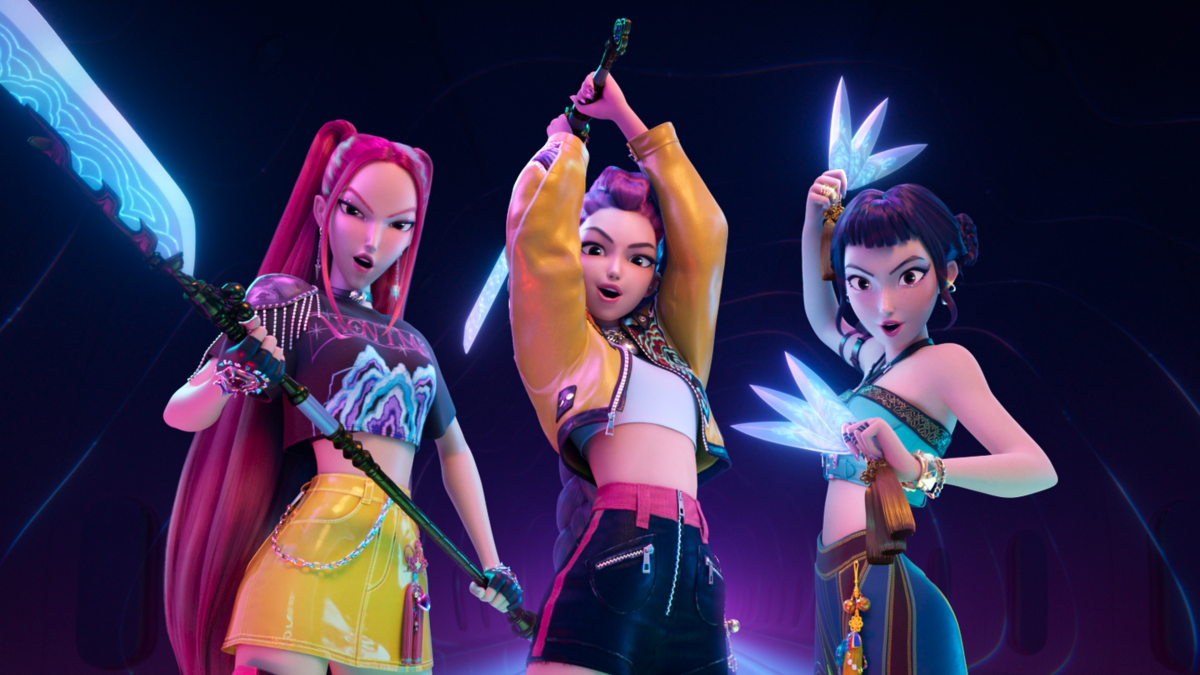
The film’s chart-topping soundtrack has proven to be just as successful as the movie — with the album earning five Grammy Award nominations, including the movie’s song “Golden” being nominated for best pop duo/group performance and song of the year. “Golden” also reached No. 1 on the Billboard Hot 100 singles chart and won a Golden Globe for best original song.

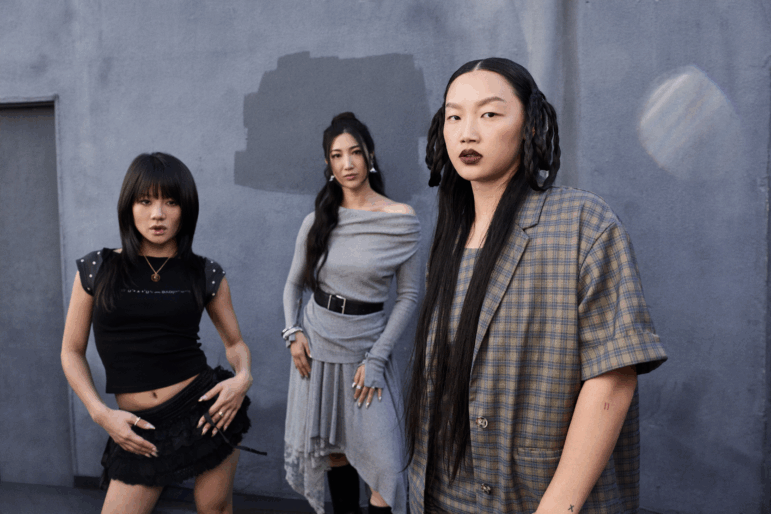
Behind the singing voices of the fictional HUNTR/X are the real-life music artists Audrey Nuna, Rei Ami and EJAE — entertainers who, much like the characters they voice, have built successful music careers. Audrey Nuna, who sings for Mira, and Rei Ami, who sings for Zoey, are both singer-rappers. While EJAE, who is the voice of Rumi, is a singer-songwriter and producer, with EJAE sharing writing credits on several songs on the Kpop Demon Hunters soundtrack, including “Golden.”
In an interview with All Things Considered at a recording studio in Los Angeles, Audrey Nuna, Rei Ami and EJAE discussed Kpop Demon Hunters and its breakout success. Speaking to NPR’s Ailsa Chang, they explored their journeys as artists, the dreams they have for the future of the Kpop Demon Hunters universe and how they’ve honored their Korean heritage through their work in the film.
The interview text below has been edited for length and clarity.
This interview is part of an All Things Considered series featuring first-time Grammy nominees, ahead of the February 1 awards.
Ailsa Chang: Why do you think this movie and its music have resonated with so many people of all ages?
Rei Ami: I think the world, the universe, they were yearning for something new and refreshing. New faces, new ways to show Asian women that are multifaceted, that are not just one character, like that nerdy schoolgirl, you know, that’s quiet and submissive. Like, you look at Mira. She’s so cool and she’s not eager to please. But Zoey, she’s very eager to please and she’s very loud. And then we have Rumi, who’s just very like…
Ejae: A workaholic.
Chang: Not that that’s ever an Asian stereotype.
Ejae: Also we’re super silly, we have funny jokes, and we make funny faces and we’re not always perfect.
Chang: And you guys love to eat! It’s so nice seeing Asian women in a movie love to eat.
Chang: Yeah, you stuff your mouths in this film.


Chang: Ejae, you’ve been a songwriter for a really long time, right? And a producer? You were one of the main songwriters for this soundtrack, including for the hit single ‘Golden.’ What does it feel like for you as an artist to get this level of recognition now at this point in your career?
Ejae: It feels very serendipitous. I’m glad it happened now, than when in my twenties, figuring life out.
Chang: You’re glad it happened later in life.
Ejae: I’m really glad that it happened now.
Chang: Tell me why.
Ejae: Because I think when I was a K-pop trainee — I got dropped, first of all. But I also really intentionally chose not to go that route because I don’t think I would — it’s kinda dark – but I don’t know if I’d be here.
Chang: You mean alive?


Ejae: Well yeah, it was hard. And the industry’s not easy. So as dark as that might sound, it just kind of was the truth at that moment. And I don’t think I was mentally prepared for that at that age.
Chang: You guys are huge globally. Very huge in South Korea. Your music has its own life there. Has this film, has this whole experience, made you want to reconnect even more deeply with your Korean culture, your Korean heritage, your Korean identity?
Rei Ami: Absolutely.
Ejae: I went recently. I go there twice a year because I work in K-Pop as well. So I’m used to hearing my songs like in the convenience store or something. But hearing my voice like — you know the tteok-bokki stands? You eat tteok-bokki and you hear my voice blasting. It’s so trippy.
Audrey Nuna: I feel like it’s deepening roots for sure. I went to Korea. I played Pentaport Festival about a few weeks after this film came out. And this was kind of when I didn’t realize how big the film was actually going to be. But I saw a Korean grandpa street-performing “Golden” on this traditional Korean instrument outside of Dongdaemoon station. And I was like, okay, that’s crazy. And then when I played Pentaport a few days later, I remember just looking into the crowd. This was one of the few moments in my life where I really felt so emotional. Like I almost cried on stage. Because just staring into a sea of Korean faces — and I can just see like the raw heart and soul. And it just rocked me to my core. I was just like, what a resilient culture.
Rei Ami: We’re very resilient people.
Ejae: Korea’s resilient.
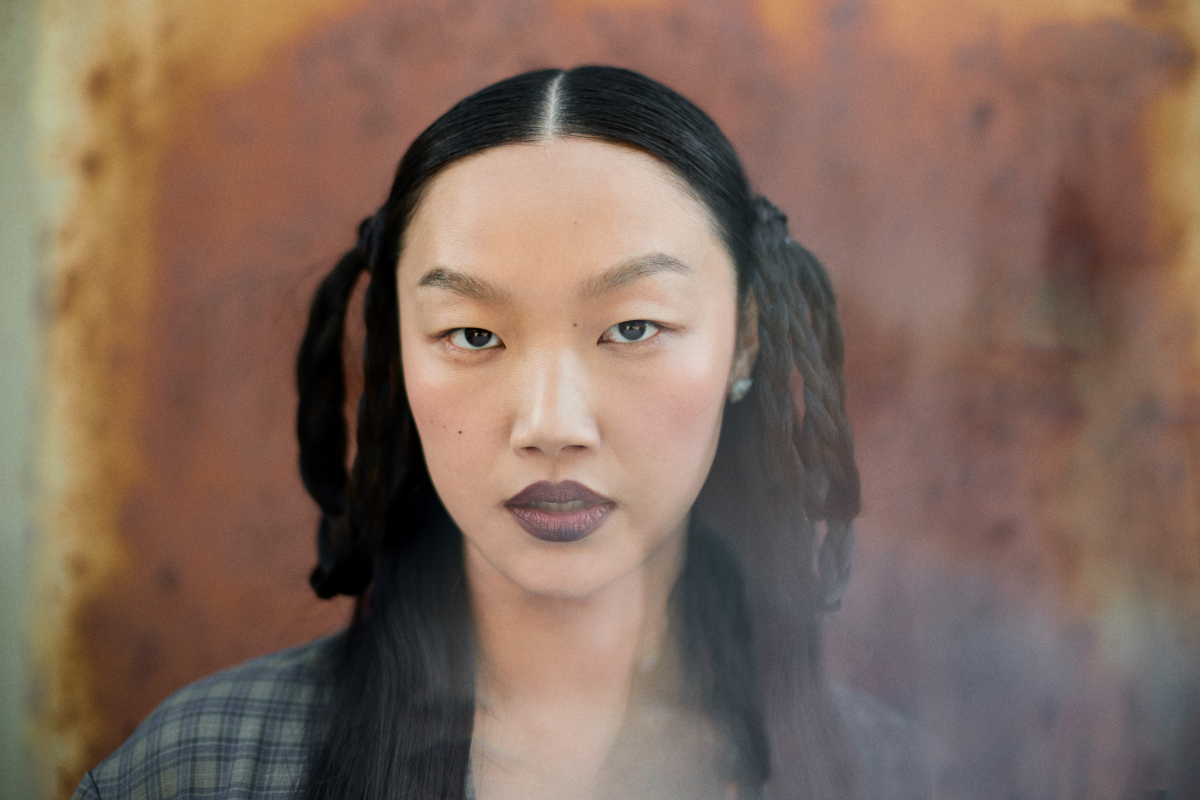
Rei Ami: I think this movie kind of validated my expressiveness. Because I’m very expressive now. I refuse to dim, water down any color because all my life I spent doing that. And so I just refuse now. The most validating thing is seeing other Korean girls look at me and be like, “Thank you. Thank you for teaching me that it’s okay to be expressive, and to show myself and be emotional.” Because as a culture, especially as Korean women, if we’re not submissive, quiet or docile, or if we’re taking up too much space, we are punished. I just was so inspired to maybe break those generational curses and inspire this new generation of people that it’s okay to feel. It’s okay to express.
Chang: So KPop Demon Hunters is set to have a sequel in 2029, I believe it is. What are your hopes for this sequel?
Audrey Nuna: I think it would be cool to see us or see the characters in different cities — and kind of explore the lore of different demon history throughout different cultures. I think Huntr/X should go global for this one.
Rei Ami: Yeah. World tour fighting Chinese demons, Brazilian demons, Mexican demons. There’s demonology everywhere, and they’re all very unique. Fighting Bigfoot. Is he a demon? I don’t know. I don’t care. We’re fighting him.
If you or someone you know is in crisis, please call or text 988 to reach the Suicide and Crisis Lifeline, or contact the Crisis Text Line by texting TALK to 741741.
Transcript:
AILSA CHANG, HOST:
Today, we are kicking off our annual series about first-time Grammy nominees with a band that started off 2025 as a complete unknown, but it turned into one of the year’s biggest pop sensations.
(SOUNDBITE OF SONG, “GOLDEN”)
EJAE, AUDREY NUNA AND REI AMI: (As HUNTR/X, singing) I was a ghost. I was alone. (Singing in non-English language).
CHANG: Of course, I’m talking about HUNTR/X, the singing trio of Rumi, Mira and Zoey from the Netflix animated hit “K-Pop Demon Hunters.” Their music is now nominated for five Grammys.
(SOUNDBITE OF SONG, “GOLDEN”)
EJAE, NUNA AND AMI: (As HUNTR/X, singing) We’re going up, up, up. It’s our moment. You know together we’re glowing, gonna be, gonna be golden.
CHANG: I recently met up with the three very real humans behind HUNTR/X – EJAE, Audrey Nuna and Rei Ami. We were at a recording studio in LA.
EJAE: Nice to meet you. How’s it going?
CHANG: You guys look gorgeous – amazing. You know, this radio, right? No one can see you guys.
EJAE: Oh, thank you.
(LAUGHTER)
AUDREY NUNA: We woke up like this.
REI AMI: We woke up like this, no.
CHANG: They might sound like they’ve known each other for years. But actually, the three of them first met up in real life at the film’s premiere. Rei Ami, aka Zoey, pulls out a little gift for Audrey Nuna, who sings for Mira.
(SOUNDBITE OF COOING)
AMI: It’s a Mira keychain.
NUNA: Look at the brows.
AMI: I know.
NUNA: On fleek. Oh, my God. This is so epic. Thank you. I’m going to sleep at night with this on my pillow.
CHANG: With your little doppleganger.
AMI: It’s your – what is it – dream catcher?
NUNA: Yeah.
NUNA: My dream catcher.
AMI: Demon catcher.
NUNA: Demon dream catcher.
(SOUNDBITE OF SONG, “HOW IT’S DONE”)
EJAE, NUNA AND AMI: (As HUNTR/X) You came at a bad time, but you just crossed the line. You want to get wild? OK, I’ll show you wild.
(As HUNTR/X, singing) Better come right, better luck tryin’, gettin’ to our level.
CHANG: I asked them why they thought “K-Pop Demon Hunters” has resonated so deeply. Here’s Rei Ami. And a note – this story discusses suicide.
AMI: I think the world, the universe was – they were yearning for something new and refreshing, new faces, new ways to show Asian women that are multifaceted, that are not just one character, like, that nerdy schoolgirl, you know, that’s quiet and submissive. Like, you look at Mira, and she’s so cool and she’s not eager to please. But Zoey, she’s very eager to please, and she’s very loud. And then we have Rumi who’s just very like…
EJAE: A workaholic – I’m kidding (ph).
AMI: Right.
CHANG: Not that that’s ever an Asian stereotype.
EJAE: But also, like, we’re super silly. We have, like, funny jokes, and, like, we make funny faces. And we’re not always perfect.
CHANG: And you guys love to eat.
EJAE: Yeah.
CHANG: It’s so nice seeing Asian women in a movie love to eat.
NUNA: And, like, we don’t eat like – we eat like (growling).
CHANG: Yeah, you stuff your mouths in this film (laughter).
EJAE: Exactly.
(SOUNDBITE OF SONG, “HOW IT’S DONE”)
EJAE, NUNA AND AMI: (As HUNTR/X, singing) Making fear afraid to breathe till the dark meets the light.
CHANG: I mean, EJAE, you’ve been a songwriter for a really long time – right? – and a producer.
EJAE: Mm hmm.
CHANG: You were one of the main songwriters for this soundtrack, including for the hit single, “Golden.”
EJAE: Yes.
CHANG: What does it feel like for you as an artist to get this level of recognition now at this point in your career?
EJAE: It feels very serendipitous. I’m glad it happened now than when I’m in my 20s, figuring life out.
(SOUNDBITE OF SONG, “FREE”)
EJAE: (As Rumi, singing) I try to hide, but something broke. I tried to sing, couldn’t hit the notes. The words kept catching in my throat.
CHANG: You’re glad it happened later in life.
EJAE: I’m really glad it happened now.
CHANG: Tell me why.
EJAE: Because I think when I was a K-pop trainee, the reason why I chose – I got dropped, first of all. But I also really intentionally chose not to go that route because I don’t think I would – it’s kind of dark, but, like, I don’t know if I’d be here.
CHANG: You mean alive?
EJAE: Well, yeah, like, it was hard.
CHANG: Yeah.
EJAE: Like, you know, the industry is not easy. So as dark as that might sound, like, it just kind of was the truth at that moment, and I don’t think I was mentally prepared for that.
(SOUNDBITE OF SONG, “FREE”)
EJAE: (As Rumi, singing) Keep me in chains and all the damage that might make me dangerous. You got a dark side. Guess you’re not the only one. What if we both tried fighting what we’re running from?
CHANG: You guys are huge globally, very huge in South Korea. Your music has its own life there. Has this film, has this whole experience made you want to reconnect even more deeply with your Korean culture, your Korean heritage, your Korean identity?
AMI: Absolutely.
EJAE: Well, I went recently. I go there twice a year ’cause I work in K-pop, as well, so I’m used to hearing my songs, like, in the convenience store or something, but hearing my voice, like…
NUNA: Such a flex (ph).
EJAE: You know the tteok-bokki stands?
NUNA: Yes, from, like, the (inaudible).
EJAE: It’s like, you eat tteok-bokki and you hear my voice blasting. Like…
AMI: (Laughter).
NUNA: Yeah.
EJAE: It’s so trippy.
(SOUNDBITE OF SONG, “WHAT IT SOUNDS LIKE”)
EJAE, NUNA AND AMI: (As HUNTR/X, singing) We broke into a million pieces and we can’t go back. But now we’re seeing all the beauty in the broken glass.
NUNA: I feel like it’s deepening roots for sure. I mean, I went to Korea. I played Penaport Festival about a few weeks after this film came out. And this was kind of when I didn’t realize how big the film was actually going to be. But I saw a Korean grandpa street performing “Golden” on this traditional Korean instrument outside of the Tom Demon Station. I was like, OK, that’s crazy. And then when I played Pentaport a few days later, I remember just looking into the crowd and getting – this was one of the few moments in my life where I really felt so emotional. Like, I almost cried on stage because just staring into a sea of Korean faces, and I can just see, like, the raw heart and soul. And it just rocked me to my core. I was just like, what a resilient culture, you know?
CHANG: Oh, that’s for sure.
AMI: We’re very resilient people.
EJAE: Korea’s resilient.
(SOUNDBITE OF SONG, “WHAT IT SOUNDS LIKE”)
EJAE, NUNA AND AMI: (As HUNTR/X, singing) My voice without the lies, this is what it sounds like. Why did we cover up the colors stuck inside our head?
AMI: I think this movie kind of validated my expressiveness ’cause I’m very expressive now. I refuse to dim, water down any color because all my life, I spent doing that. And so I just refuse now. The most validating thing is seeing other Korean girls, like, look at me and be like, thank you. Thank you for, like, teaching me that it’s OK to be expressive and to show myself and be emotional because as a culture, especially as Korean women, if we’re not submissive, quiet or docile, we – or if we’re taking up too much space, we are punished for that.
CHANG: Yes. Hello, Asian women.
NUNA: I know.
CHANG: I so relate to what you’re saying.
AMI: You know.
EJAE: Yeah.
AMI: Like, I just was so inspired to maybe, like, break those generational curses and inspire this new generation of people that it’s OK to feel. It’s OK to express.
CHANG: I love that.
(SOUNDBITE OF SONG, “TAKEDOWN”)
EJAE, NUNA AND AMI: (As HUNTR/X, singing) Takedown, takedown, takedown, down, down, down. HUNTR/X girls to the world. Takedown, takedown, down, down, down. It’s a takedown. So sweet, so easy on the eyes…
CHANG: So “K-Pop Demon Hunters” is set to have a sequel in 2029, I believe it is. What are your hopes for this sequel?
NUNA: I think it would be cool to see us or see the characters in different cities and kind of explore the lore of different demon history throughout different cultures and kind of go – I think HUNTR/X should go global for this one.
AMI: Yes, world tour.
NUNA: Yeah, world tour.
CHANG: Multicultural demons.
AMI: Yeah, fighting Chinese demons…
CHANG: Yeah.
AMI: …Brazilian demons…
CHANG: Let’s get it out.
NUNA: European demons.
AMI: …Mexican demons ’cause they’re – I mean, there’s demonology everywhere, and they’re all very unique.
CHANG: Exactly.
AMI: Fighting Bigfoot – is he a demon? I don’t know. I don’t care. We’re fighting him.
(SOUNDBITE OF SONG, “TAKEDOWN”)
EJAE, NUNA AND AMI: (As HUNTR/X, singing) I’ma gear up and take you down. (Vocalizing).
CHANG: Audrey Nuna, EJAE and Rei Ami, congratulations to all three of you on your multiple…
AMI: Thank you.
NUNA: Thank you.
CHANG: …Your five Grammy nominations for your music.
EJAE: Thank you.
CHANG: You guys are the voices behind HUNTR/X, the fictional band in the animated film “K-Pop Demon Hunters” – pretty amazing.
EJAE: Thank you.
AMI: Thank you.
NUNA: Thank you, NPR.
EJAE: (Non-English language spoken).
AMI: (Non-English language spoken).
(SOUNDBITE OF SONG, “TAKEDOWN”)
EJAE, NUNA AND AMI: (As HUNTR/X, singing in Korean).
(As HUNTR/X, singing) You’ll be begging and crying, all of you dying, never miss my shot.
CHANG: And if you or someone you know is in crisis, call or text 988 to reach the Suicide & Crisis Lifeline.
(SOUNDBITE OF SONG, “TAKEDOWN”)
EJAE, NUNA AND AMI: (As HUNTR/X, singing) Ready for the takedown.
(As HUNTR/X, singing in Korean).
CHANG: Our first-time Grammy nominee series continues tomorrow with the jazz singer Michael Mayo on ALL THINGS CONSIDERED.
(SOUNDBITE OF SONG, “TAKEDOWN”)
EJAE, NUNA AND AMI: (As HUNTR/X, singing) It’s so obvious. I’ma gear up and take you down. (Vocalizing).