


The Ides of January are already upon us. Which means that by now, most of the sweetly misguided pollyannas who made New Year’s resolutions have already given up on that nonsense. Don’t beat yourself up about it! Travel and exercise would only have hogged your precious reading time anyway.
And boy, is there a lot of good stuff to read already. This week alone, a reader with an active imagination may pay visits to Norway and Chile, China and Pakistan. Later this month brings new releases from big names on either side of the Atlantic Ocean.
(By the way, this year the Book Ahead is transitioning from weekly posts to monthly, for a broader lens on the publishing calendar.)


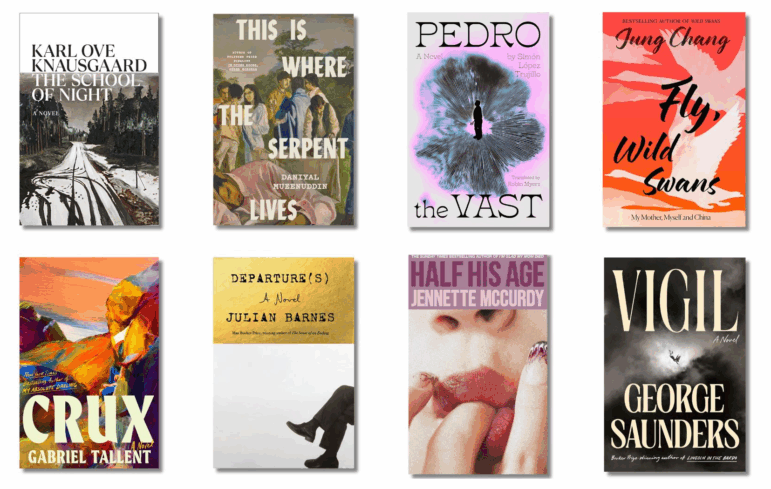
The School of Night, by Karl Ove Knausgaard, translated by Martin Aitken (Jan. 13)
Knausgaard is an alchemist. The prolific Norwegian consistently crafts page-turners out of the daily drudgery you’d usually find sedative rather than thrilling. The same inexplicable magic permeates his latest series, which began with The Morning Star and here gets its fourth installment. Only, unlike projects such as his autofictional My Struggle, Knausgaard here weaves his interlinked plots with actual magic – or supernatural horror, at least, as a vaguely apocalyptic event loosens the tenacious grip of his characters’ daily cares. The School of Night features Kristian Hadeland, an eerie figure in previous books, whose faustian bargain promises to illuminate this mystery’s darkest corners.


This Is Where the Serpent Lives, by Daniyal Mueenuddin (Jan. 13)
The setting in Mueenuddin’s debut novel — a modern Pakistan rife with corruption, feudalism and resilience — thrums with such vitality, it can feel like a character in its own right. But the home of this sweeping saga of class, violence and romance can also be seen as a “distorting mirror,” says Mueenuddin, whose short stories have earned him nods for the Pulitzer Prize and National Book Award. “Without a doubt,” he told NPR’s Weekend Edition, “I’ll have failed miserably if readers don’t see in this a great deal of themselves and of their communities.”

Pedro the Vast, by Simón López Trujillo, translated by Robin Myers (Jan. 13)
It won’t take long to finish this hallucinatory vision of ecological disaster. Getting over Trujillo’s disquieting novella, however, is another matter. The eponymous Pedro is a eucalyptus farmer who has worked the dangerous, degrading job all his life, so it’s to be expected when he’s among the workers who pick up a bad cough from a deadly fungus lurking in the grove. Less expected is the fact that, unlike his colleagues, Pedro does not die but wakes up changed, in ways both startling and difficult to comprehend. This is the Chilean author’s first book to be translated into English.

Fly, Wild Swans: My Mother, Myself and China, by Jung Chang (Jan. 13)
Chang began this story more than 34 years ago, with Wild Swans, a memoir that viewed 20th century Chinese history through the prism of three generations of women — and remains banned in China still. Now, Jung picks up the story where she left off, in the late 1970s when Chang’s departure set her family’s story on heartbreakingly separate paths — her own, unfolding in the West, and that of the family she left behind in China. Jung applies a characteristically wide lens, with half an eye on how the past half-century of geopolitical tumult has upturned her own intimate relationships.

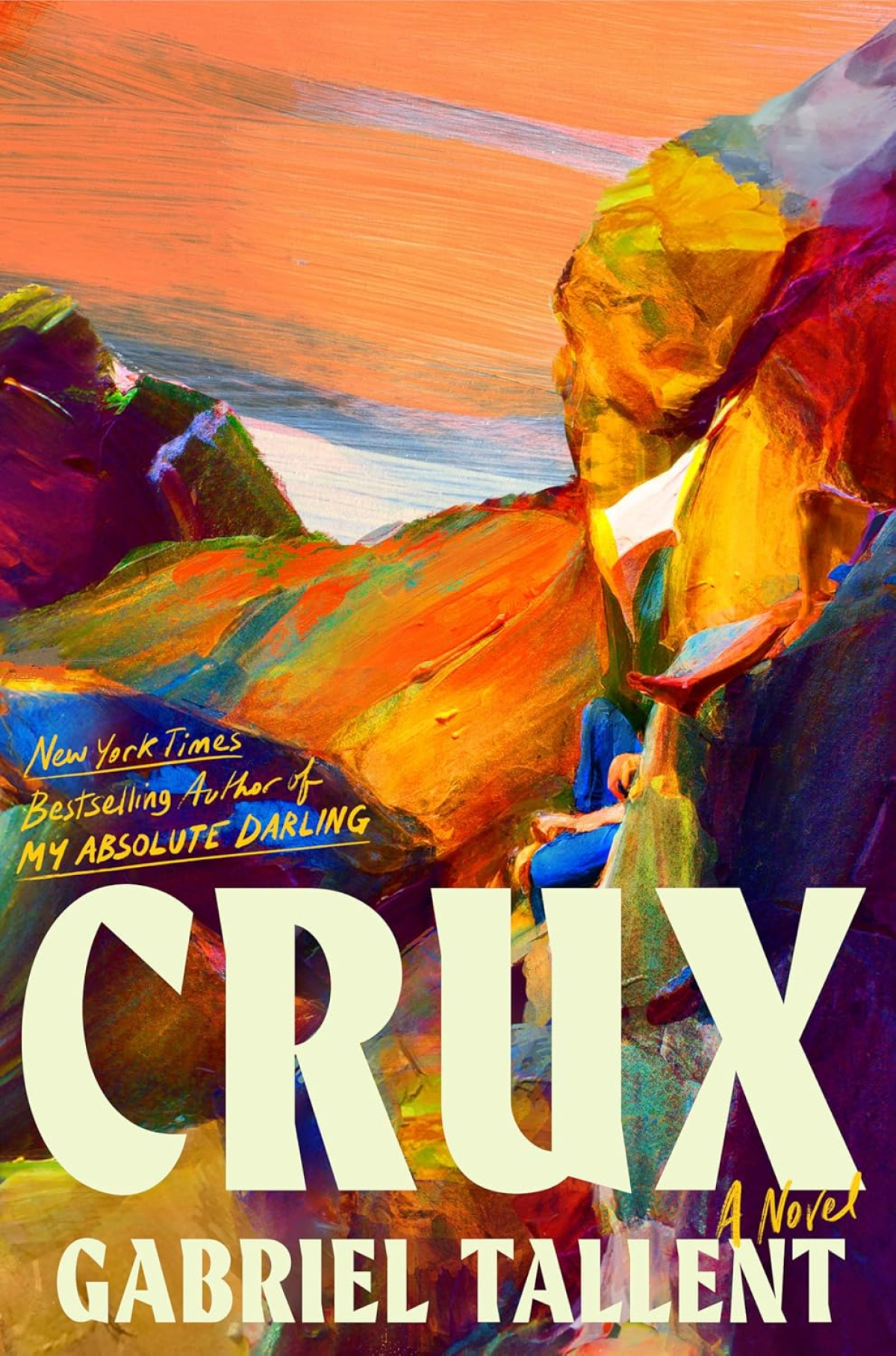
Crux, by Gabriel Tallent (Jan. 20)
It’s been the better part of a decade since Tallent published his debut novel, My Absolute Darling, a portrait of a barbed father-daughter relationship that NPR’s reviewer described as “devastating and powerful.“ In his follow-up, Tallent returns to that adolescent minefield we euphemistically call “coming of age,” this time focusing on a complicated bond between a pair of friends living in the rugged Mojave Desert. It’s an unlikely friendship, as sustaining as it is strained by their unforgiving circumstances, as the pair teeter precariously on the cusp of adulthood.


Departure(s), by Julian Barnes (Jan. 20)
The winner of the 2011 Booker Prize (and finalist for several more) returns with a slim book that’s a bit tough to label. You’ll find it on the fiction shelf, sure, but also, it’s narrated by an aging British writer named Julian who is coping with a blood cancer diagnosis. The lines aren’t easy to find or pin down in this hybrid reflection on love, memory and mortality, which is as playful in its form as its themes are weighty.


Half His Age, by Jennette McCurdy (Jan. 20)
“If I could have shown myself where I am now, I would not have believed it when I was little,” McCurdy told WBUR in 2023. The former child star certainly has undergone a dramatic transformation in recent years — from noted Nickelodeon alum to a writer whose best-selling memoir, I’m Glad My Mom Died, made a pretty compelling case why kid actors “should not be allowed to go anywhere near Hollywood.” Now she’s stepping into fiction, with a debut novel that features a provocative, at times puzzling, courtship and the same black humor that shot through her previous work.


Vigil, by George Saunders (Jan. 27)
One of America’s most inventive stylists returns with his first novel since the Booker Prize-winning Lincoln in the Bardo. It’s hard not to hear some echoes of A Christmas Carol in this one, which also finds a mean old magnate in need of some supernatural bedside attitude therapy. But don’t expect a smooth show from narrator Jill “Doll” Blaine, the comforting spirit assigned to dying oil baron K.J. Boone. For one thing, the unrepentant fossil fuel monger can expect more than just three visitors in this darkly funny portrait of a life ill-lived.