


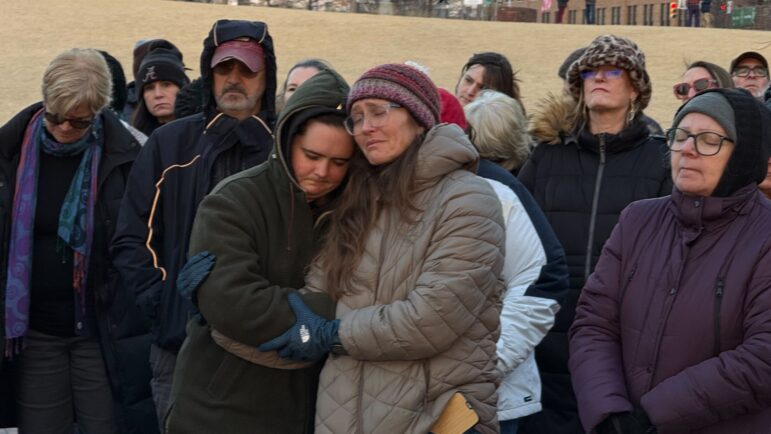
Members of the Birmingham community bore the cold Friday evening in a two-hour vigil in honor of Alex Pretti, who was shot and killed by federal immigration agents last weekend in Minnesota, and others who have died in incidents involving United States Immigration and Customs Enforcement.
The vigil, organized by Birmingham Indivisible, which describes itself as a grassroots, pro-democracy group, was held at Railroad Park.
“We’re here to pray for the victims. We’re here to pray for those that were killed. We’re here to pray for the children who are afraid to go to sleep at night. We’re here to pray for the families who lost a breadwinner and they don’t know where the breadwinner is,” Anne Turner-Henson, a member of the organization, said in her opening remarks of the evening.
Signs were discouraged, and instead attendees held candles and flashlights as they prayed, sang and spoke with one another.
Every 15 minutes, organizers rang a bell signaling a time for prayer led by many clergy in attendance. Rev. Dollie Howell Pankey, one of the organizers of the event, conducted the group in song.
“This Little Light of Mine,” “Lean on Me” and “Siyahamba” were some of the songs.
“I’ve chose them because I want to have something that is reflective, but also things that encourage us and help us because it is a difficult season and time for everybody who’s gathered here, and we need to have something to encourage us as well,” Pankey said.
Clergy prayed for peace, solidarity, and justice after the killing of at least eight people at the hands of federal agents in 2026 alone.

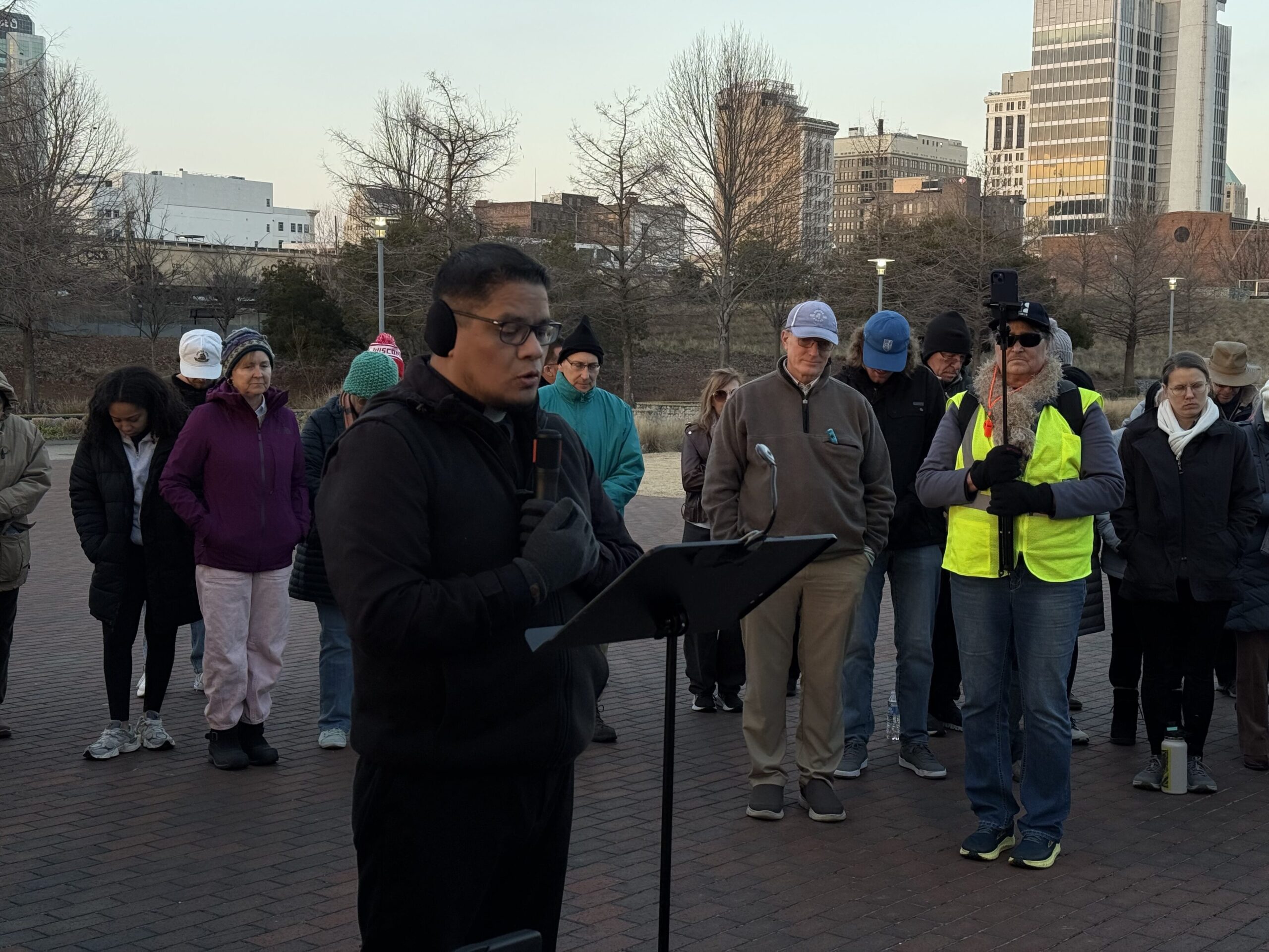
“ I cry out for the spirit of radical solidarity. I call upon the spirits of those who refuse to be silent while their neighbors were in chains. Connect my story to the Black struggle in this city,” Father Rafael Esparza prayed. ”Teach us that the border is just another form of the color line.”
“[in Christianity] people are made in the image of God. And that cannot be just words that sound nice, but rather values that I have to take on,” Esparza said when asked how his faith informs his perspective. “And it seems that at this moment, we forget that. And unless we really try to do that, anything else we do inside the four walls of our churches or anything we say publicly will not matter.”
Dalia Abrams, a member of Temple Beth-El, offered an interpretation of the Torah.
“ So when the Torah says over and over again, you need to not oppress a stranger, it’s really saying you need to not oppress an immigrant, for you know the feelings of the immigrant having yourself been immigrants in the land of Egypt,” Abrams said.
Pastor Terry Hamilton-Poore was one of the faith leaders who spoke. Before offering her prayer, she called back to Abrams’ remarks.
“ In the Gospel of Matthew, Egypt gets another chapter,” Hamilton-Poore said.
She explained that while Egypt had once been inhospitable to the stranger, as Abrams shared, Egypt also became a place of refuge for Jesus’ family.
“And so we have here a story of a country that was a land of slavery, oppression, exploitation that becomes a land of welcome and refuge. Nations can change their narrative, and so we pray that our nation can as well,” Hamilton-Poore said.
When asked what she would say to faith leaders who don’t agree with her position, she responded clearly.
“ I can really only speak directly to others who are Christian and ask them to read their Bible. Ask them to try and imagine Jesus acting like this,” she said.
“If you’re a follower of Jesus, try and act like Jesus.”

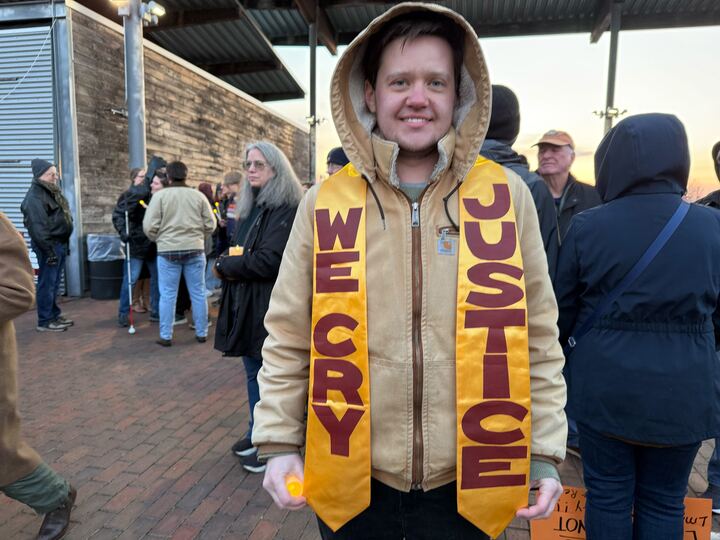
Shailly Gupta Barnes, the Director of Research and Policy for the Kairos Center and Policy Director for the Poor People’s Campaign: A National Call for Moral Revival was also in attendance.
“ Faith in times of crisis has been something that reminds us that it’s important to feel that way, that we are not alone. It also reminds us that we are deserving of having a society that meets all of our needs, that we are deserving of having spaces to express our grief and joy and pain.” she said when asked the role of faith in a moment like this one.
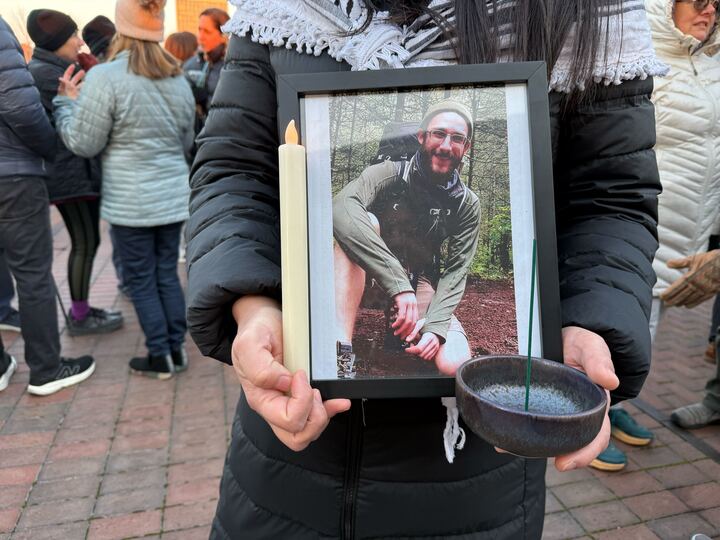
Vigil attendee Haruna Takahashi held up a photo of Pretti. She’s participated in other events by Birmingham Indivisible.
“ I was very careful in preparing for tonight to turn off my usual approach to these gatherings,” she said. “Normally I’m angry. I’m frustrated. And I really wanted to come approach this more peacefully, out of respect for the people we’ve lost.”
Instead of anger, Takahashi said she feels sad and “overwhelming grief.”
As the evening grew colder, participant Anisa Dawn mentioned that it was colder in Minnesota. They saw a connection with Birmingham’s history.
“I think it’s just the whole country kind of coming together in solidarity and Birmingham was the battleground for a lot of years for civil rights, and so it’s just kind of remembering the roots,” Dawn said. “We’re just the next generation that’s fighting for the same thing for more people.”
Vahini Shori is a Report for America corps member covering faith and culture for WBHM.
This reporting is supported by WBHM’s Local Journalism Innovation Fund. Find out more about the fund and how to donate here.